

A balcony one metre wide can still keep you in basil from June to September. It comes down to three pots, a handful of decisions made before you buy anything, and the willingness to pinch out the tops of plants that look perfectly happy as they are.
What follows is a six-week starter plan for a small space: a windowsill's worth of floor, a couple of chairs, a railing. Basil, flat-leaf parsley and mint are herbs that cost little, forgive small mistakes, and pay you back in salads and pasta by midsummer. Nothing here needs a greenhouse, a car, or a Saturday lost to a garden centre.
Before Week One: The Three Decisions That Matter
Almost every failed balcony herb comes down to light, drainage, or a pot that was too small.
Light. Basil wants four to six hours of direct sun, ideally in the morning. Parsley manages with a little less and sulks in deep shade. Mint is the most tolerant of the three, though it still prefers a sunny spot with some afternoon relief.
Drainage. Every pot needs holes in the base and a saucer underneath. Run-off dripping onto the balcony below annoys the neighbours and, in some buildings, breaks the rules — worth checking before you hang anything over the railing.
Weight. Compost is heavy when wet. Keep large pots near the wall rather than on the outer edge, and lift them onto feet so they never sit in a puddle.
The shopping list is short:
- Three containers: about 20–25 cm across for basil, 25 cm deep for parsley, 30 cm for mint
- A saucer for each pot
- Peat-free multipurpose compost, plus a small bag of grit or perlite
- Liquid plant feed
- A watering can with a fine rose
- Scissors or small snips
Week 1: Buy Seedlings, Not Everything Else
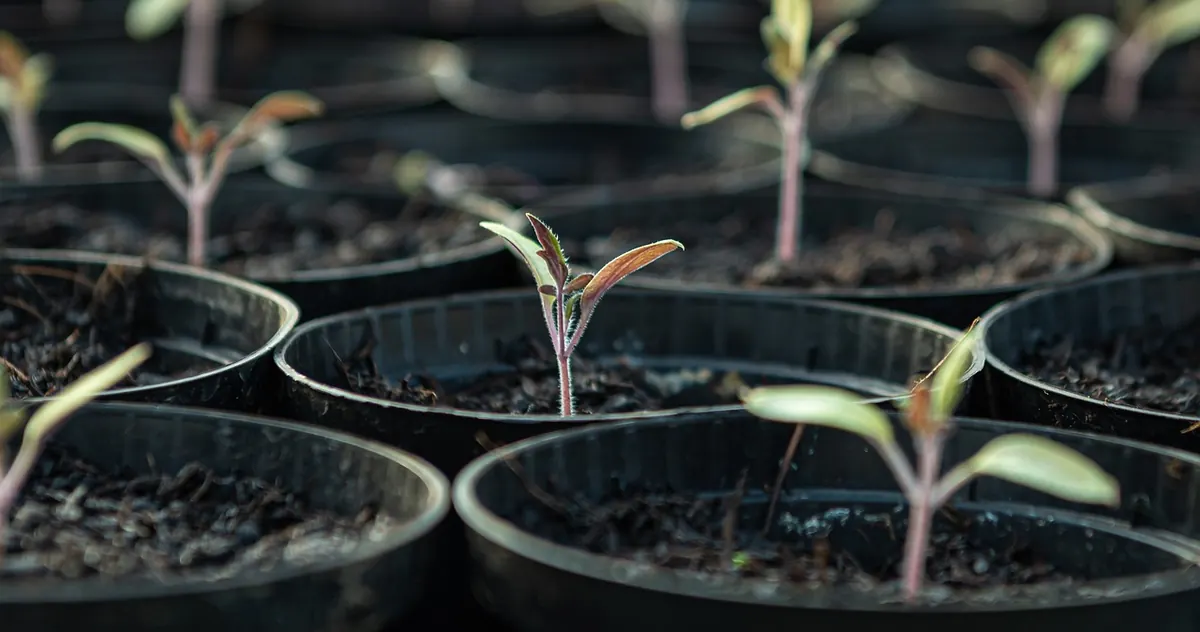
First-week success is mostly about what you carry home. Seed is cheap, but parsley takes the best part of two months from sowing to a usable sprig. Seedlings put you three or four weeks ahead, and on a balcony that head start is the difference between harvesting in week five and harvesting in August.
Three herbs, three ground rules
Basil: one supermarket pot usually holds six or more seedlings crammed together. Split them into two or three clumps and pot them up — they will double in size within a fortnight. Choose a compact bush variety; the big-leaved types need more room than you have.
Parsley: flat-leaf is the one worth growing for flavour. It sends down a long taproot, which is why it wants a deeper pot and dislikes being moved once established.
Mint: give it its own container, always. Left in a shared pot, its runners reach the edges within a season and take the space they want. Buy a plant rather than seed, which is slow and uneven.
Set the empty pots in their final positions now and look at them from the kitchen door. It is much easier to move them while they still weigh nothing.
Week 2: Planting Day
Set aside an hour, ideally on a mild, overcast morning. Seedlings brought straight from a warm nursery will scorch in full sun, so give them three or four days in a shaded corner first, bringing them out gradually.
- Water the seedlings an hour before you start, so the root ball holds together.
- Mix a handful of grit or perlite into the compost to keep it open. Skip the layer of broken crocks at the bottom — drainage holes and gritty compost do the job, and gravel only raises the water table.
- Fill each pot a third full, sit the plant in the middle, and check that the top of the root ball sits about 2 cm below the rim. That gap is your watering space.
- Fill around the roots, firm gently with your fingers, and water until it runs out of the base. Empty the saucer after twenty minutes; herbs dislike standing in water as much as they dislike drying out.
- Label the pots if you think you will forget which mint is which. A strip of masking tape on the side is enough.
- Keep the pots in their shaded spot for another two days, then move them into their final position.
The day after planting, look closely at the stems. If any have been buried too deep, lift the plant slightly and reset it. Basil in particular rots if the stem is kept wet below the first pair of leaves.
Week 3: The First Pinch
This is the week the plan starts to look like gardening rather than shopping. By now the basil should have two or three pairs of true leaves, and the temptation is to leave it alone. Resist that. Pinching out the growing tip — the little cluster of leaves at the top of each stem — tells the plant to branch. One stem becomes two, then four, and a bush is formed.
Use your thumb and forefinger, or a clean pair of snips, and take the tip just above a pair of leaves. The removed tip is perfectly edible, so drop it into a salad. Do the same to mint once it has made a decent clump, though less aggressively: mint grows fast enough without encouragement.
Parsley is slower. Leave it to settle, keep the compost evenly moist, and remove any yellowing outer leaves so energy goes into new growth. A fortnight of patience now is what gives you a plant that keeps producing through summer.
Week 4: Watering, Feeding and the Weather
By the fourth week the pots are heavier and the plants are drinking properly. Balcony herbs fail more often from irregular watering than from neglect. A plant that dries out to the point of wilting and is then flooded will sulk for days. Aim for compost that feels like a wrung-out sponge: damp, not sodden.
In warm weather, check each pot every morning by pushing a finger into the top 2 cm. Water at the base, not over the leaves, and use a can with a fine rose so the compost is not washed away. If the forecast is for a hot afternoon, water early; evening watering is the next best choice, but leaving foliage wet overnight invites mildew.
Feed every two weeks with a liquid plant feed diluted to half strength. Basil and parsley grown in containers are entirely dependent on what you give them, and a hungry plant is a pale, thin-stemmed plant. Mint is less demanding but benefits from the same routine.
Wind. Balconies funnel it. If the stems are bending sideways, move the pots closer to the wall or shelter them behind a railing planter. Basil leaves tear easily, and windburn looks much like underwatering: drooping leaves with dry, crispy edges.
Week 5: First Harvest
By week five there should be enough basil for a caprese salad or a small batch of pesto. Harvest from the top down, taking no more than a third of the plant at once. Cut just above a pair of leaves, as you did when pinching, and the plant will push out two new shoots from that point.
Parsley is ready when the outer stems are long enough to use. Cut them at the base rather than stripping individual leaves, and always leave the central crown to regrow. Mint can be treated the same way; a handful from the top of each stem keeps it compact and stops it flopping over the rim of the pot.
If you only do one thing in week five, harvest something. Herbs that are never cut become leggy and woody, and a plant that has been encouraged to branch will give you more leaves in August than one that was left alone in June.
Week 6: Keep It Going
The sixth week is a check-in, not a finish line. Give each pot a tidy: remove dead leaves, trim any stems that have run away, and turn the pots a quarter turn so the plants grow evenly towards the light. Top up the compost if it has settled below the rim, and check that the saucers are clear.
If the basil has started to flower, pinch out the buds. Flowering changes the flavour and slows leaf production; unless you want seed, keep the plant in leaf. The same goes for mint, though a few flowers at the end of summer will do no harm and will bring in bees.
Plan the next six weeks now. A second sowing of basil in a small pot can follow the first, and parsley will often keep going into autumn if it is kept watered and picked. Mint is the one to watch: by late summer it may need root pruning or a larger pot, otherwise it will exhaust its compost and stop producing.
Troubleshooting at a Glance
- Yellow lower leaves: usually too much water or poor drainage. Check the saucer and let the compost dry slightly between waterings.
- Pale, spindly growth: not enough light, or not enough food. Move the pot to a brighter spot and feed at half strength.
- Crispy edges: wind, sun scorch, or inconsistent watering. Shelter the pot and water more evenly.
- White powder on leaves: mildew, often from poor air circulation or wet foliage overnight. Remove affected leaves and water at the base.
- No flavour: usually fast growth in rich compost and too little sun. Give basil as much direct light as the balcony allows.
A Small-Space Planting Plan
If the balcony is very tight, use the railing. A pair of brackets and a long planter can hold basil and parsley at waist height, leaving the floor for a chair and a single mint pot. Keep the heaviest pot at the wall end, group the pots so they shade each other's roots on hot days, and leave a gap for watering access.
Three pots are enough to start. Add a fourth only when you have kept the first three alive for a full six weeks. By then the routine will be part of the morning: a finger in the compost, a pinch at the top of the basil, a handful of parsley on the way back inside. That is the whole plan — small space, short list, and a summer of herbs that cost less than a supermarket bunch.
Related posts
More stories you’ll love reading